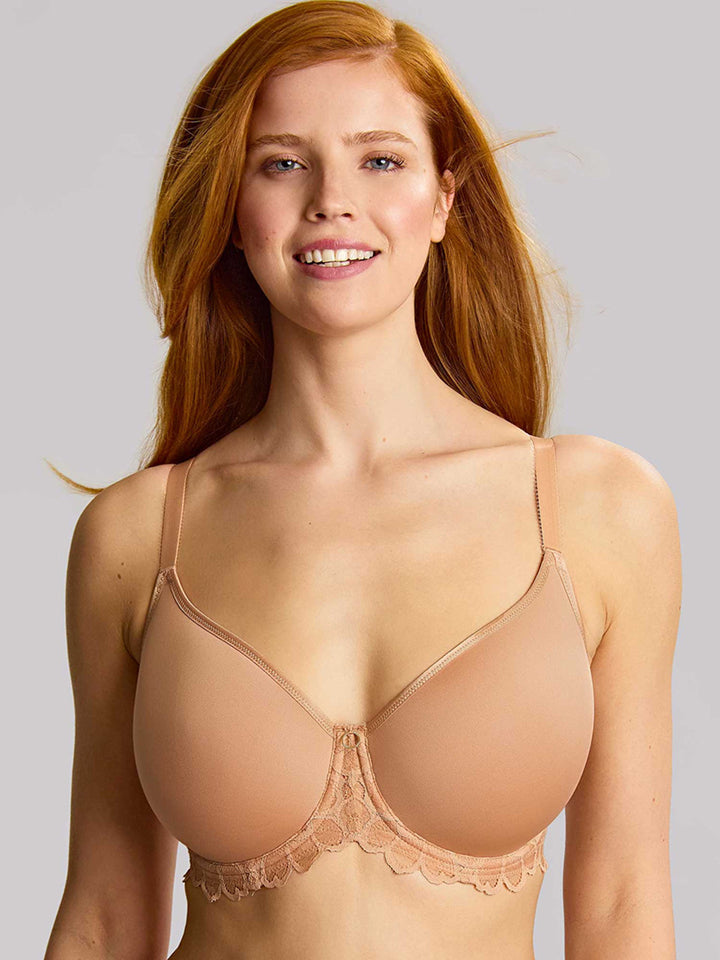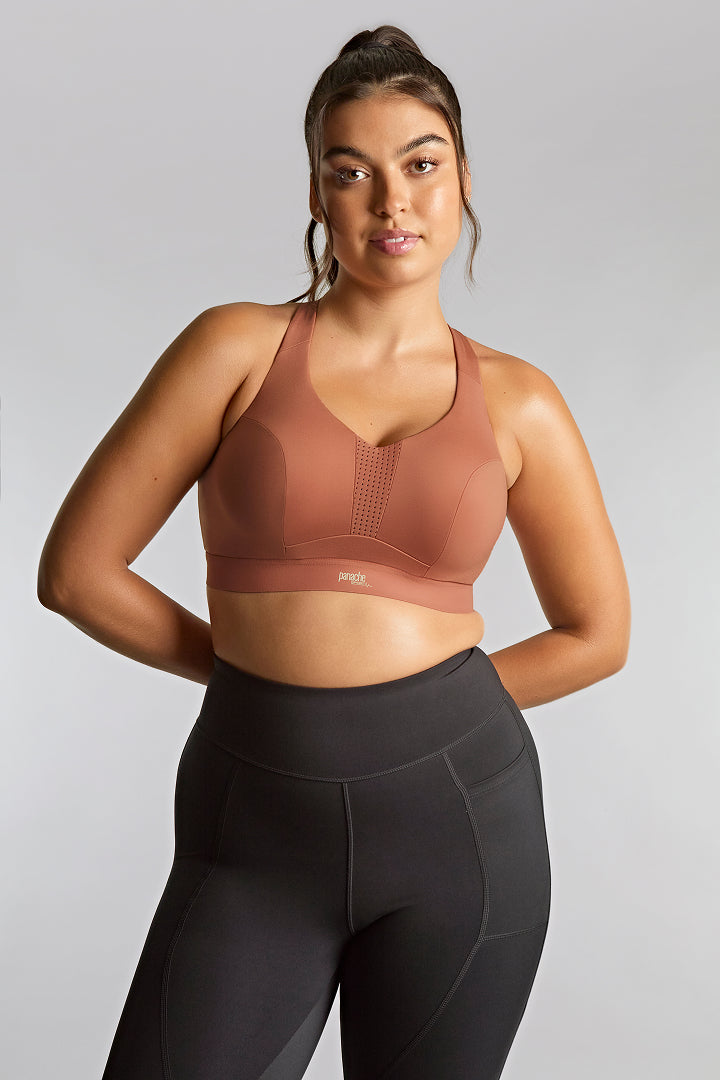
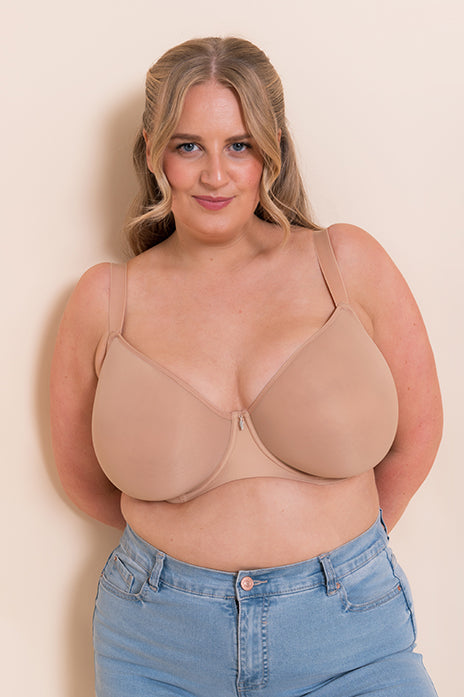


Two bras can carry the same size on the label and still fit you completely differently. Most of that comes down to the cup. The types of bra cups differ in how much of you they cover and in how they're built, and on a fuller bust both of those decide whether you feel held or spend the day tugging. For the whole picture of bra styles, see every bra style explained. This guide goes one level deeper, into the cup itself, with a fitter's view of what works for a heavy bust.
What are the types of bra cups?
Bra cups differ in two ways. First, coverage: how much of your breast the cup covers, from a full cup to a balcony, a plunge or a demi. Second, build: how the cup is made, whether it's sewn from several fabric panels (seamed), shaped from one piece of foam (moulded), or soft with no wire. Together, coverage and build decide your shape and how well a fuller bust is held.
When you shop, ask both: how much cover, and what build?
The main types of bra cups, by coverage
Full cup
A full cup covers most of your breast, with the top edge sitting high on the chest. It holds everything in one place and stops spill over the top edge.
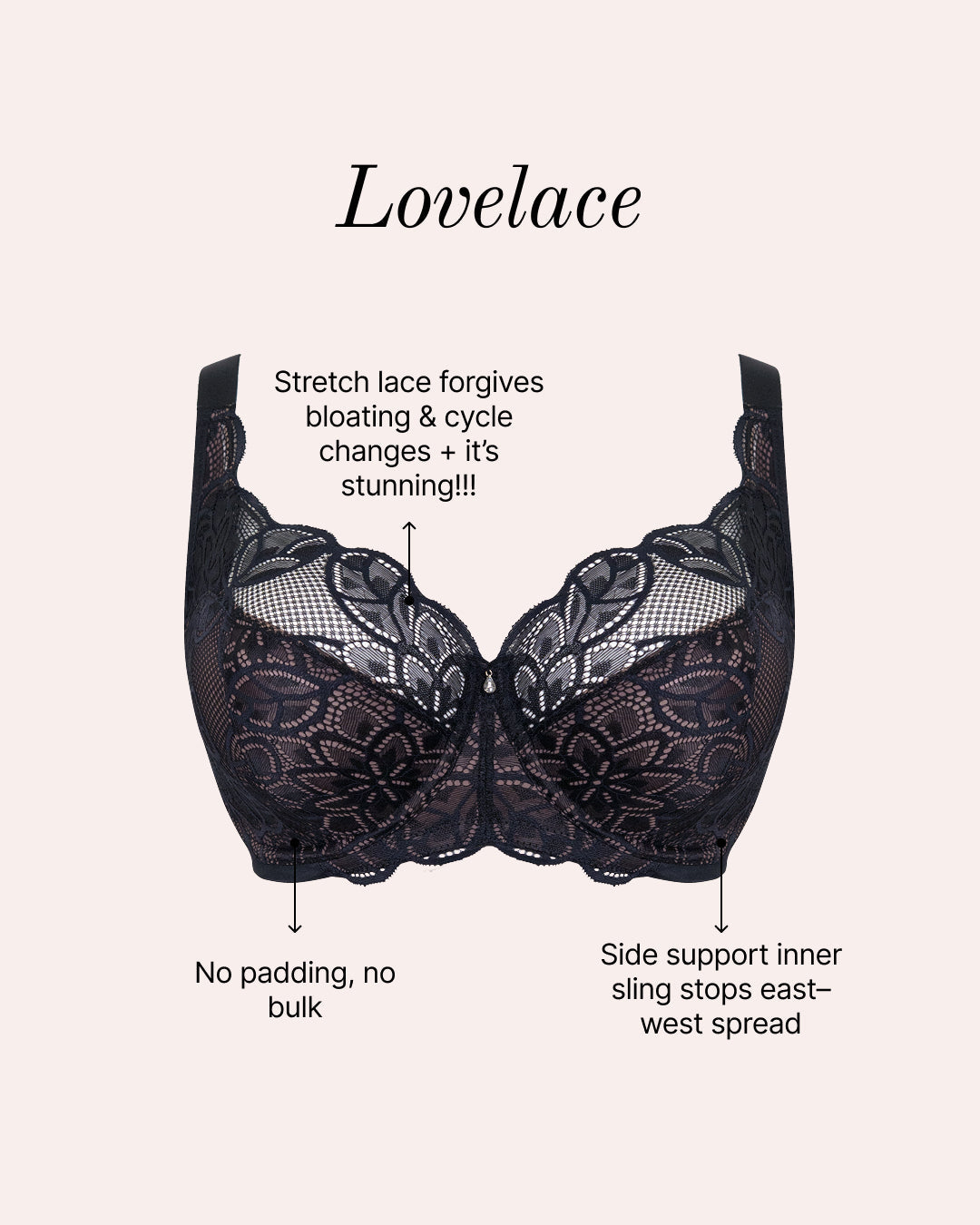
On a fuller bust: the most secure everyday option, especially with a firm side panel. The Lovelace Full Cup uses unlined stretch lace and a side sling to lift and centre you.

Balconette or balcony
A balcony cup is cut lower and straighter across the top, with straps set wider apart. It lifts from underneath and gives a rounded shape.
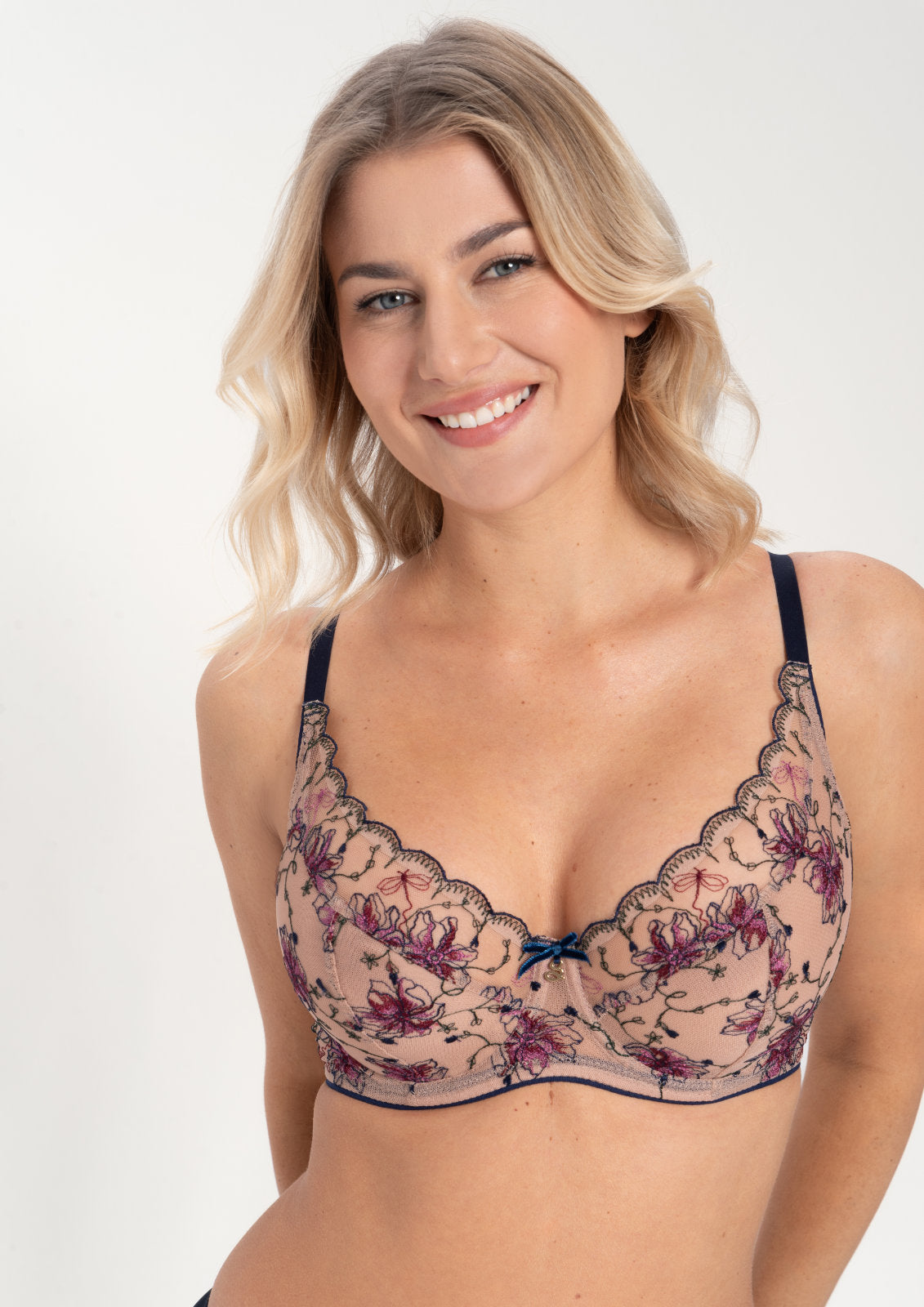
On a fuller bust: great if full cups gape at the top. The Frida Balcony has embroidered cups that shape you with a light, easy feel.
Plunge
A plunge cup dips low in the centre, so the centre piece between the cups sits lower.
On a fuller bust: look for a plunge with tall side panels, so you get the low front without the "am I falling out?" feeling. The Flare Plunge is built that way.

Demi
A demi cup covers roughly half to three-quarters of the breast and leaves more of the top open.
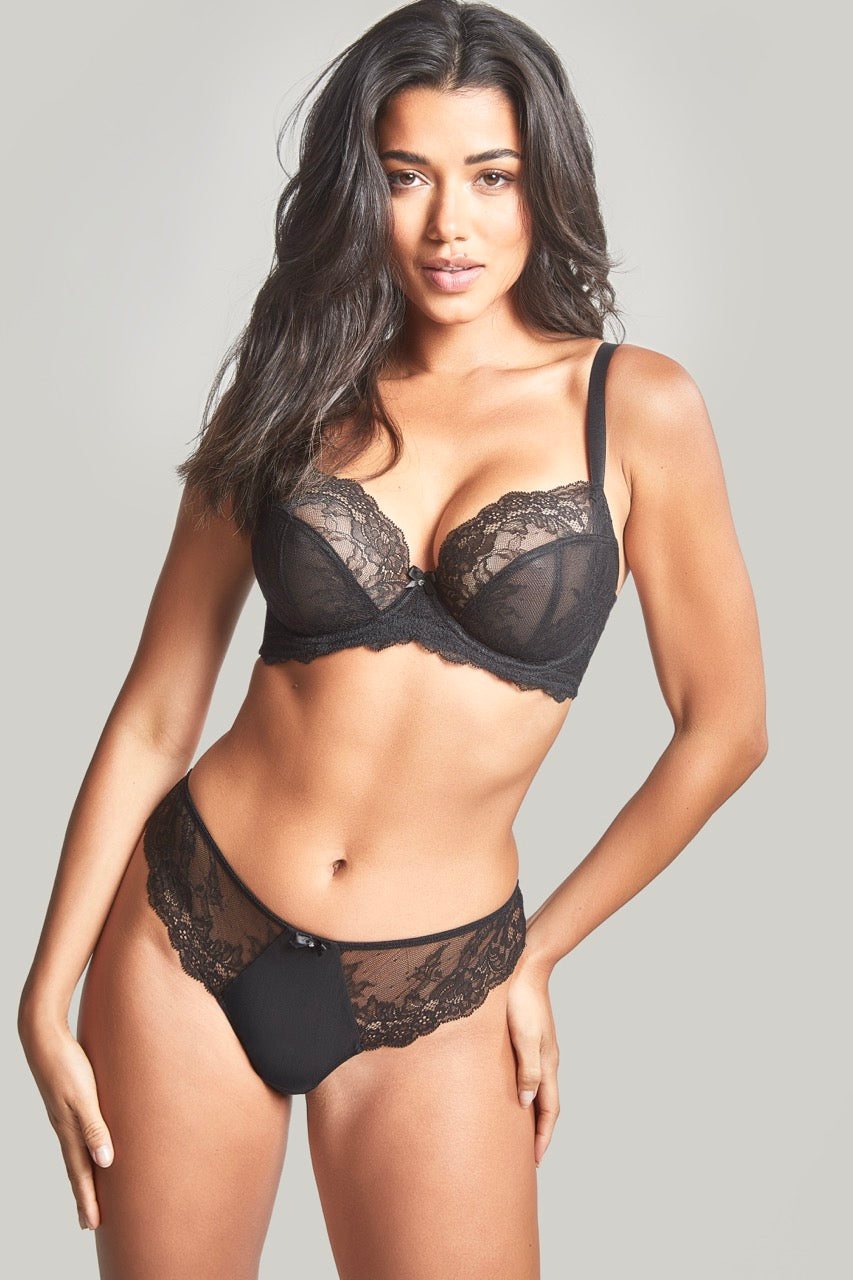
On a fuller bust: it suits you when the cup is deep enough at the base; if the top edge cuts in, go up in cup or switch to a balcony. The Cherie Demi Plunge is an underwired demi in eyelash lace.
| Cup | Covers | Best under | On a fuller bust |
|---|---|---|---|
| Full cup | Most of the breast | Everyday wear; high necklines | Most secure; stops spill over the top |
| Balcony | Lower, straight top edge | Square and scoop necks | Lifts from below; good if full cups gape |
| Plunge | Low in the centre | V-necks and low necklines | Pick one with tall side panels |
| Demi | About half to three-quarters | Wide or low necklines | Needs a deep enough base |
Bra cup shapes by construction: seamed, moulded and soft
Seamed cups
Seamed cups are sewn from panels of fabric: two-part, three-part or four-part. Each seam shapes the cup a little more, which is why bigger cups tend to have more parts: the seams lift you up and forward instead of letting weight sit low. A four-part cup like the Clara Full Cup adds an inner side sling, a strip of firm fabric that guides you towards the centre.
Moulded and spacer cups
Moulded cups are one smooth piece of foam shaped into a cup, so they look seamless under T-shirts. Spacer cups are a lighter, breathable kind of foam. The trade-off: one set shape can run shallow and doesn't adapt to you, so check for gaps at the top. The Allure Moulded Spacer Tshirt uses light spacer cups that breathe.

Soft and wire-free cups
Soft cups have no wire and no foam. They're the comfort pick for slow days, but wire-free gives less lift than a wired bra, especially as cups get bigger. The Zen Non Wired is designed to separate you without an underwire.

Lined vs unlined
Unlined cups are a single layer of fabric or lace: lighter, and they follow your natural shape. Lined or padded cups add a layer for smoothness and less show-through. Our padded vs non-padded guide covers when each makes sense.
Which cup type suits you?
Look in the mirror in your current bra:
- Spilling over the top edge? Go for fuller coverage, like a full cup.
- Gaping at the top? Try a balcony or a plunge.
- Spilling at the sides? Look for side panels or a side sling; see our side support bra guide.
- Want a smooth line under T-shirts? A moulded or spacer cup.
Not sure which one you're seeing? A fitter will check it with you.
Related reading
- The best bras for a heavy bust
- Bra types explained
- What your bust size actually means
- How to choose a bra that fits
- Side support bras for a fuller bust
Questions about bra cups
Which cup size is bigger, B or C or D?
On the same band, D holds more than C, and C more than B. But a cup letter only means something next to its band number: the same letter on a bigger band holds more. Our guide to what bust size means explains how band and cup work together.
What is a demi cup?
A demi cup covers about half to three-quarters of the breast, with a lower, open top edge. It suits wide, low necklines.
Which bra cup is best for a heavy bust?
There isn't one winner. Of all the types of bra cups, seamed cups with side support tend to give the most lift and hold, in a full cup or a balcony. A moulded cup is fine for smooth everyday wear if it's deep enough. The right one fits your shape, which is exactly what a fitting checks.
What is the 3 bra rule?
Keep at least three everyday bras in rotation: one on, one in the wash, one resting. Elastic recovers between wears, so each bra keeps its support for longer.
Are seamed or moulded cups better?
Seamed cups shape and lift better as cups get bigger, and adapt to your shape. Moulded cups look smoother under fitted tops but hold one set shape.
What is the difference between a balconette and a full cup?
A full cup covers most of the breast and sits high. A balconette is cut lower and straighter across the top, with wider-set straps, and lifts from underneath for a rounder look.
Knowing the types of bra cups won't change your body, and it doesn't need to: your shape was never the problem, the wrong cup was. If you'd like someone to check it with you, book a fitting.