


You are holding a number – 34, or 36, or 38 – and nobody has told you what part of your body it describes.
Two jobs hide inside that question. You are either measuring for a garment, where "bust" is one number on a chart, or working out a bra size, where it is half the answer. The bust size meaning you need depends on which you are doing. This page answers the bra question first, then clothing. If you would rather look yourself up straight away, our bra size chart has every size in inches and centimetres.
What does bust size actually mean?
Bust size is one measurement: the distance around your body at the fullest part of your chest, tape level with the floor. It is not a bra size. A bra size needs a second measurement – your under-bust, taken around your ribcage – and the cup letter is the difference between the two numbers. One number describes you. Two numbers make a size.
That is the whole bust size meaning, and the arithmetic is this simple. Bust 36 inches, under-bust 34 inches, difference 2 inches – a B cup. Your size is 34B: band from your ribcage, letter from the gap.
Bust, under-bust and over-bust are three different numbers
Bust is the fullest part of your chest, usually across the nipple line. It is also what bust meaning in body measurement charts refers to.
Under-bust is your ribcage, directly beneath your breasts, where a bra band sits. People skip it, and it is the one that decides your band size – so if you have wondered what under bust size meaning is on a chart, that is it: ribcage, not bust.
Over-bust is taken above the fullest part, high under your arms. Some fitters use it to sanity-check an unusually deep or shallow cup; you do not need it.
One thing explains most of the confusion people arrive with. A dress marked 36 and a bra marked 36 describe two different parts of the body: the dress means your bust, the bra means your ribcage. That is what is bust size in clothing comes down to. It is also why bust size meaning in jeans and bust size meaning in pants never really lands as a question: those are waist and hip garments, and the bust row on a full-body chart is there for the top half only.
How to measure bust size at home

Three steps – this is also how to measure bra size at home, because a bra size is built from these two numbers. If you have been searching how to know bra size or how to check bra size, this is the method.
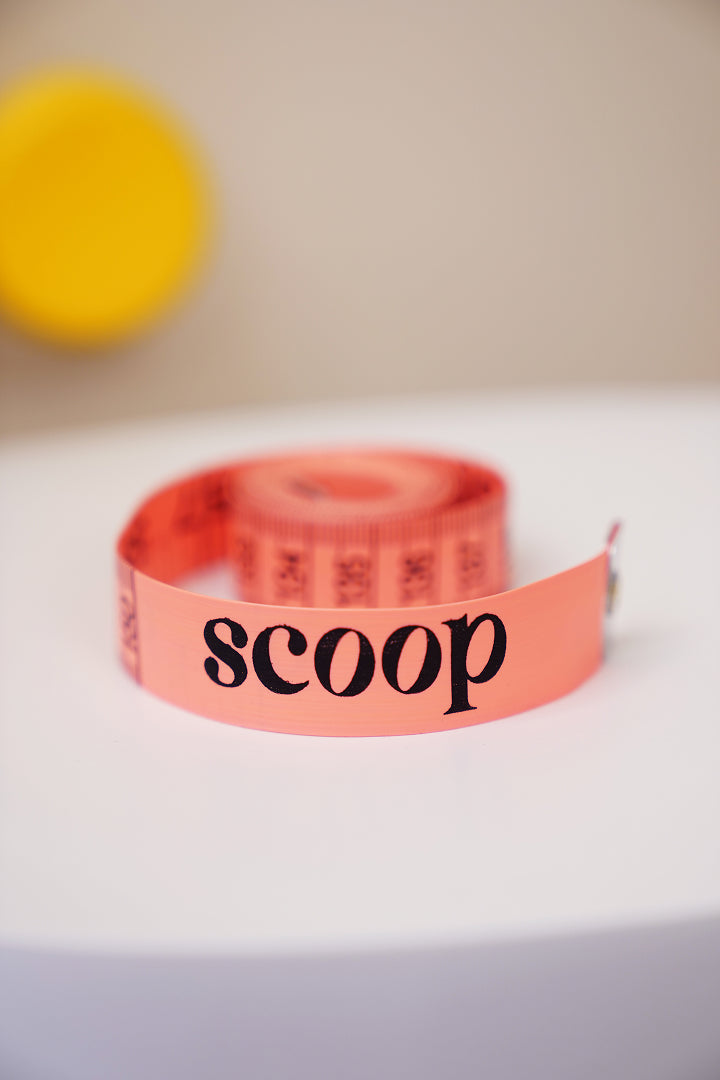
Step 1 – measure your under-bust. Wrap the tape snugly around your ribcage, directly under your breasts. Firm, not tight. Breathe normally and read the number.
Step 2 – measure your bust. Wrap the tape around the fullest part, level with the floor all the way round, including across your back – where most home measurements go wrong.
Step 3 – subtract. Bust minus under-bust. Each inch (2.5 cm) of difference is one cup letter.
Two practical points. Measure in a non-padded or lightly lined bra, never a push-up – padding adds inches that aren't yours. And this is the part almost nobody mentions: your bust measurement is not a fixed property of your body. It moves with what you are wearing, and it moves more the fuller your bust. The same person can measure over an inch apart in a padded bra versus a high-compression sports bra. So measure in the bra you would actually wear, and expect the number to shift a little between attempts. That is normal, not a mistake.
If you would rather have the arithmetic done for you, a bra size calculator will do it – or you can answer a few questions instead. For the full method – four measurements instead of two, including the leaning one most guides skip – see how to measure your bra size at home.
What the letters mean, and how to measure cup size past D
This is where every chart you have read so far stopped.
Each inch of difference is one cup letter, and the ladder does not end at D. Past D it splits into two naming systems for exactly the same volume. UK-made bras – most of what is sold to fuller busts in India – run D, DD, E, F, FF, G, GG, H, HH, J, JJ, K. American brands either repeat the D – DDD, DDDD, DDDDD – or switch to single letters that do not line up with the UK ones at all.
| Difference | UK cup | US cup |
|---|---|---|
| 4 in (10 cm) | D | D |
| 5 in (13 cm) | DD | DD; also written E |
| 6 in (15 cm) | E | DDD; also written F |
| 7 in (18 cm) | F | DDDD; also written G |
| 8 in (20 cm) | FF | DDDDD; also written H |
| 9 in (23 cm) | G | DDDDDD; also written I |
| 10 in (25 cm) | GG | J |
| 11 in (28 cm) | H | K |
That slash is a piece of bust size meaning you have almost certainly seen and been left to guess at. Charts that print "DD/E" or "DDD/F" are showing two American ways of writing the same cup: repeat the D, or switch to a single letter. And here is the trap nobody flags – that single letter is not the UK letter for the same volume. An American F is a UK E. So a chart can hand you an F while a bra fits you at an E, and neither is wrong. The gap widens the further along you go.
And the most useful thing to understand about a cup letter: it is not a description of your breasts. It is the gap between two measurements, nothing more. A 30F and a 38F are not the same size and never were – the F only means something attached to its band number. If a word here is new, our glossary covers the rest.
These sizes are real and buyable here, not theoretical. A 34FF, a 32F and a 36F all have bras sitting on them today. The full chart, in both units, is on our bra size chart.
What your bust size doesn't tell you
Two people can measure exactly the same and need completely different bras.
The numbers describe volume. They say nothing about how wide your breasts sit, how far forward they project, or whether the fullness sits high, low or toward your sides. Those things decide whether a cup gapes, digs in at the outer edge, or fits beautifully – and none of them show up on a tape measure.
So the bust size meaning stops at volume: two people who both work out a G cup can need completely different bras. Our older piece on why most people are wearing the wrong bra size makes the same point: size is not shape.
Cup shape, support structure and purpose vary independently of the letter too – see every bra type for what else actually differs.

Reading a size chart in India
Two things make bust size meaning in India harder than it needs to be.
The first is units. Most tape measures in an Indian shop read inches; several Indian charts are published in centimetres only. With an inch tape and a centimetre chart, you have to convert first. Our bra size chart prints both in every cell.
The second is that charts do not agree. Indian charts do exist past D – at least one runs to a J cup – but they are grids you look yourself up in, not explanations, so nothing tells you the same difference has a different letter depending on who made the bra. Two brands can hand the same body two different sizes and both be right.
The practical answer is to stop trusting any single chart and get measured by someone who fits for a living.
Where to go next
For every size in one grid, use the bra size chart. If the letter you worked out is further along the alphabet than your usual charts go, bras for a heavy bust is the next read. If the 34B everyone calls average is what sent you here, the average bra size in India explains where that number comes from.
Common questions
What is 34 a bust size?
It depends where you saw it. On a bra, 34 is the band – your ribcage, not your bust. On a dress or top chart, 34 is usually the bust itself. So the bust size meaning of 34 flips depending on the label: a 34 bra and a 34 dress rarely feel related.
What bust size is XL?
There is no fixed answer. XL is a garment size and every brand draws it differently – one label's XL is another's L. Find that brand's own chart and match your bust measurement to it.
How often should I re-measure?
Every six months is a good habit, and sooner after weight change, pregnancy, breastfeeding, or any point where your bras stop feeling right. Bodies change, and elastic wears out.
Is a 32 bust big or small?
Neither, because 32 on its own is not a size. It means nothing until it is paired with the other one: a 32-inch bust with a 26-inch ribcage and a 32-inch bust with a 30-inch ribcage are completely different cup sizes. The number describes a distance around your body, not a verdict on it.
What does bust mean in men's clothing?
In menswear and men's sewing patterns the equivalent measurement is the chest, taken the same way – around the fullest part, tape level with the floor.
What is a 36 bust size?
If 36 is your bust measurement, it is half of a bra size. Measure your ribcage and subtract: 36 bust with a 34 ribcage is a 34B; with a 30 ribcage it is a 30E. So what 36 bust size means depends entirely on the second number. If 36 came off a clothing label, it is that brand's bust figure for that garment.
Is bust size the same as cup size?
No, and this is the bust size meaning most people are actually looking for. Bust size is one measurement. Cup size is the difference between that measurement and your under-bust. You can have a 36-inch bust and be a B cup or a G cup, depending entirely on your ribcage. The letter is the gap, not the bust.
You came here for the bust size meaning behind a number on a tape or a label, and it turns out to be small and specific: one measurement around the fullest part of your chest, which becomes a bra size only once you subtract your ribcage, and a letter that keeps going long after most charts stop printing it. Your body isn't the problem – the charts just stopped explaining too early.