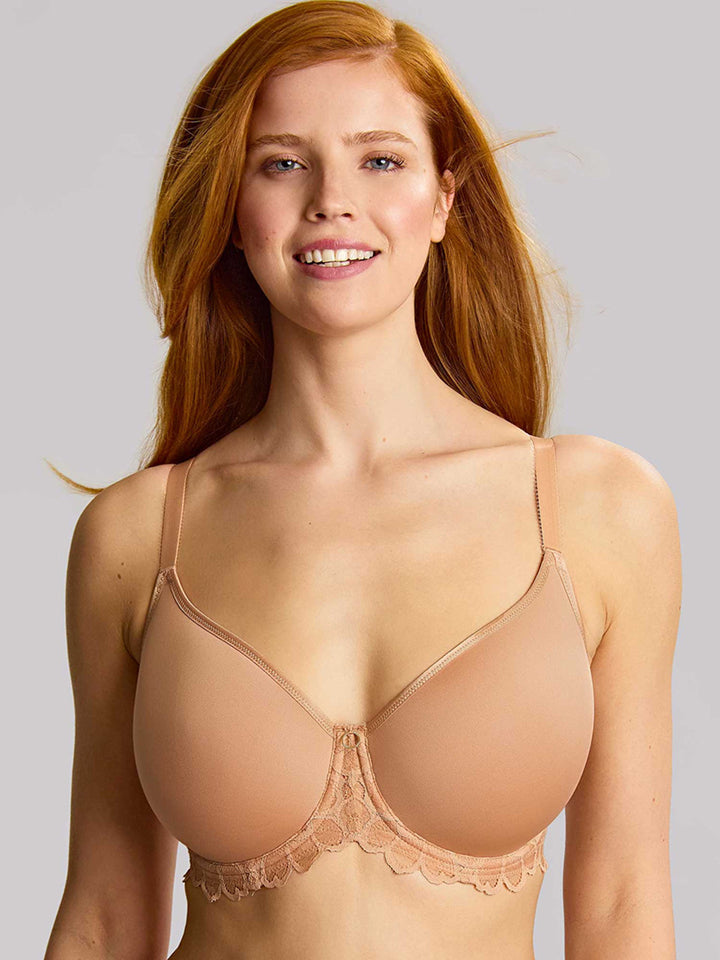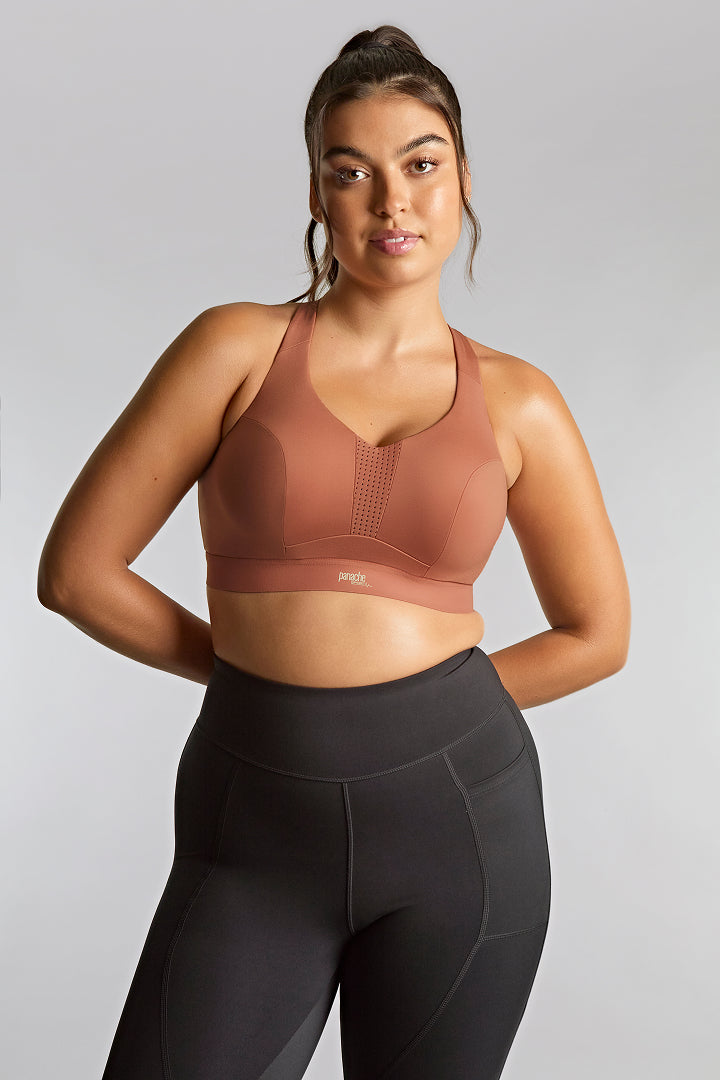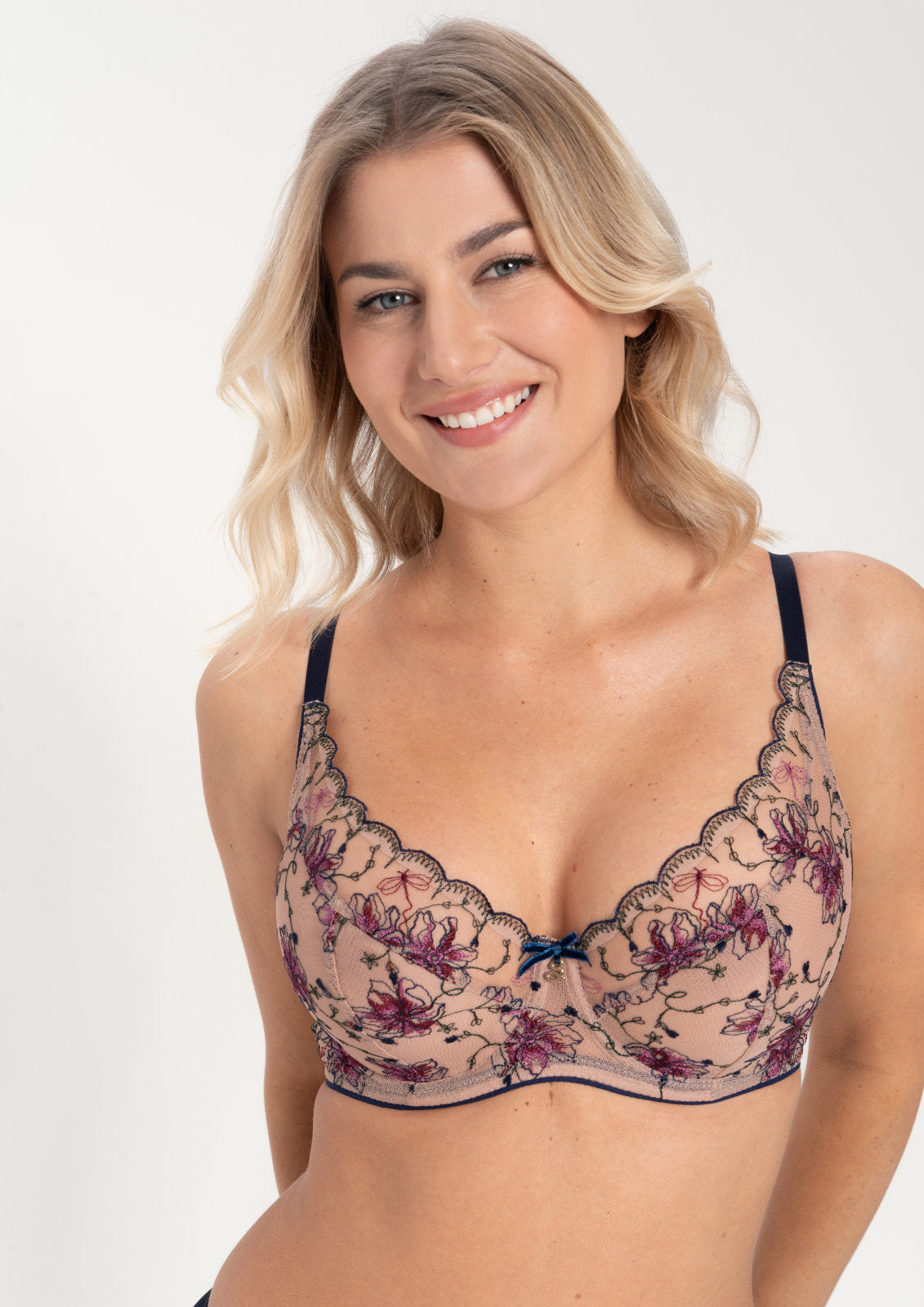
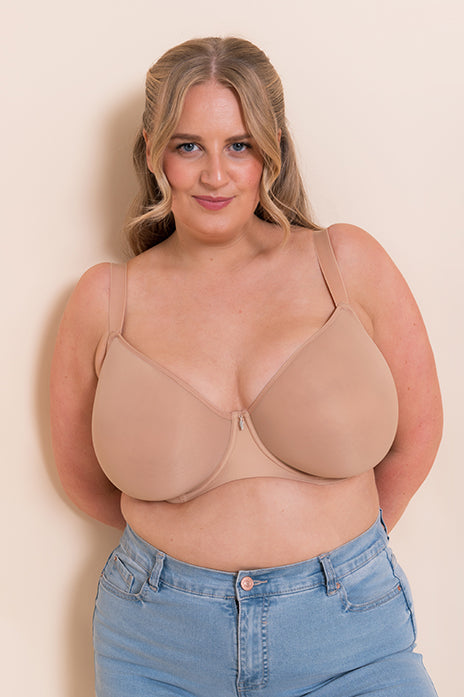
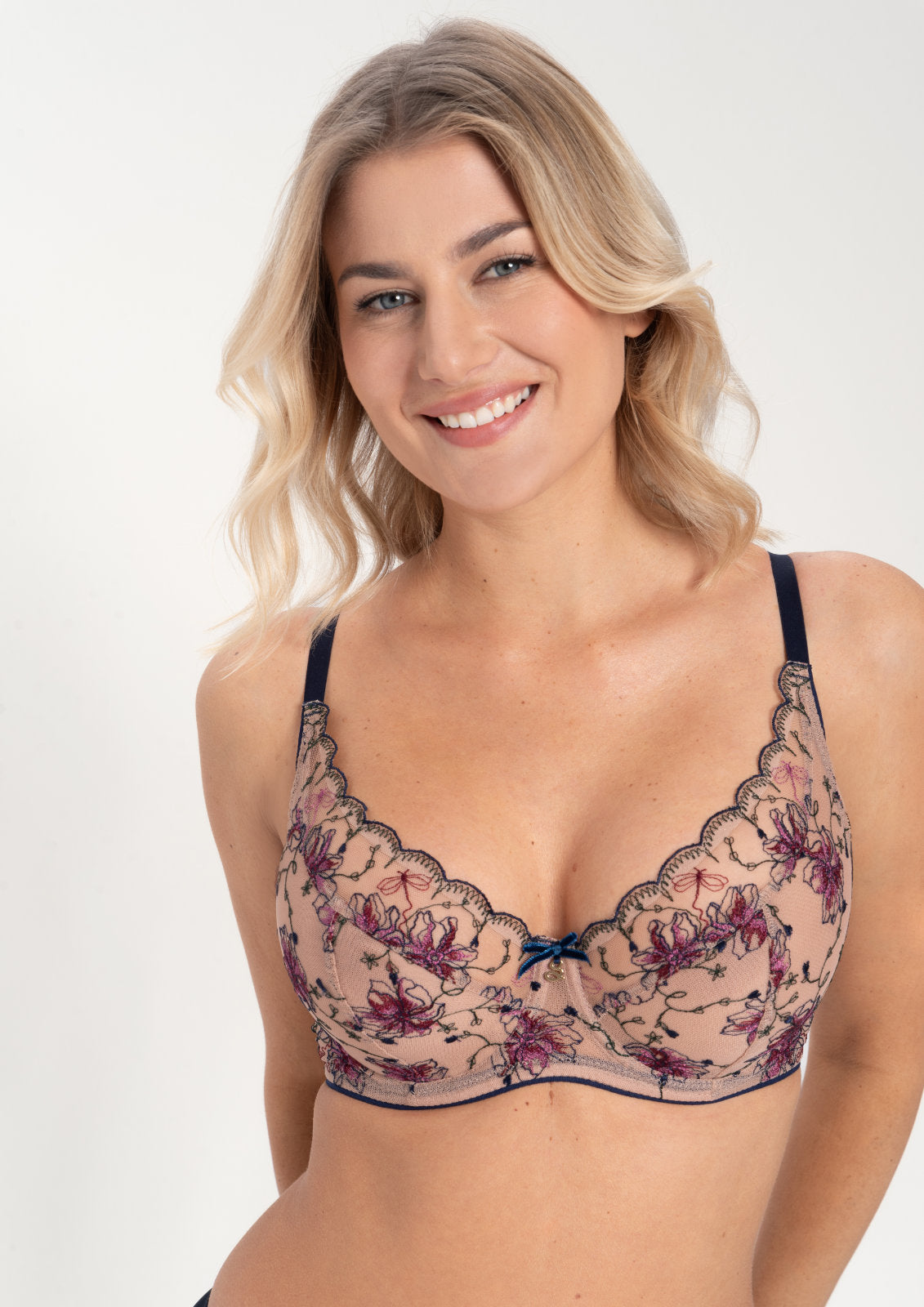
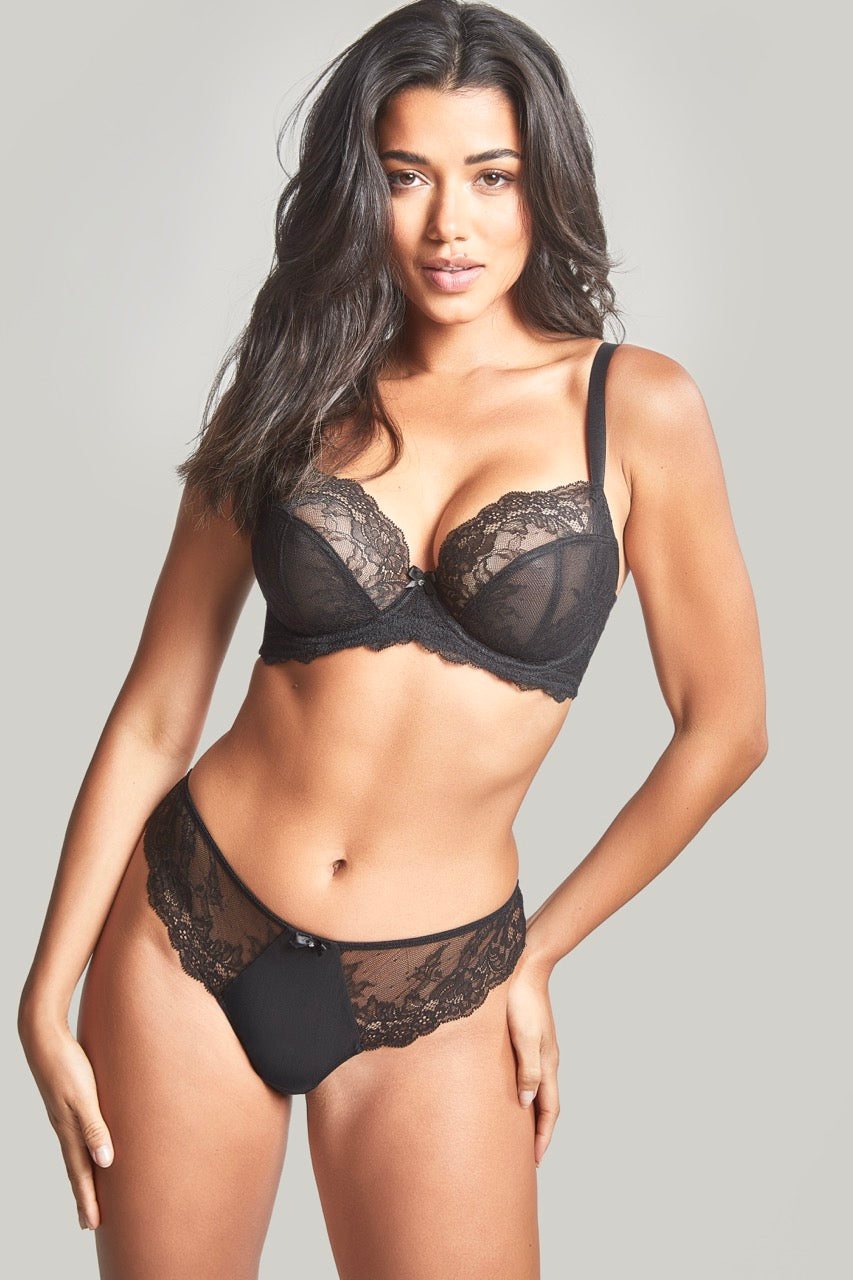


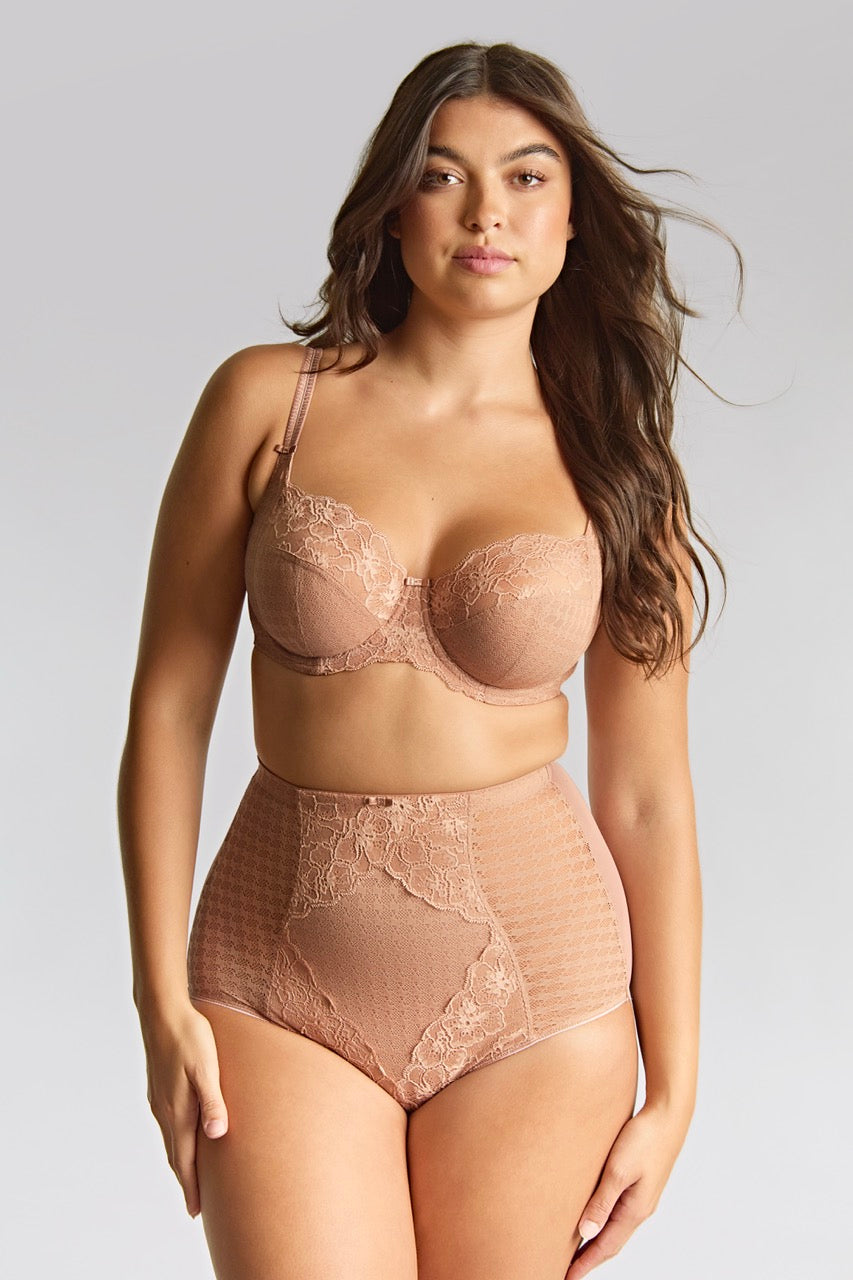
Open a bra label and you'll find a name nobody explained – balconette, spacer, longline, multiway. Most guides list these bra types without saying what any of them does for a fuller bust. This page is the rundown of women bra types sold in India today: what each one actually does, how it behaves past a D cup, and where to buy it in that size. For fit specifically, see bras for a heavy bust.
How Many Types of Bra Are There?
There's no single correct number of bra types – lists online run from 8 to over 25, because a bra type isn't one thing. Every bra combines three choices: a cup shape (coverage and lift), a support structure (wired, wireless, side panels, padding) and a purpose (everyday, sport, strapless, nursing). Mix those three and you get every style on the market. One thing that is not a type, whatever some lists say: "plus-size" and "full-figure" are not bra types – they are size ranges, and every type on this list exists in them.
Bra Names at a Glance
Here are all the common bra types in one place – the different types of bra with names and pictures that most lists scatter across a dozen headings – grouped by cup shape, support structure, and purpose.
| Type | What it does | Wear it for |
|---|---|---|
| Full cup | Covers the whole breast; no fabric cut away | Everyday, steady coverage |
| Balconette (balcony) | Cuts the cups lower and wider; lifts and rounds | Wider necklines, more cleavage |
| Plunge | Drops the centre front low | V-necks, low necklines |
| Demi | Covers about half the breast | Lighter, playful lingerie days |
| T-shirt / moulded | Smooth, seamless cups | Fitted tops, no visible lines |
| Underwire | Rigid wire under each cup for lift | Most everyday and occasion wear |
| Wireless / soft cup | No wire; panels do the work | Comfort-first days, lounging |
| Side support | Panels holding tissue in from the sides | Fuller busts, lower-cut sides |
| Padded / spacer | Foam or spacer fabric lining | Hiding show-through; light shape |
| Unlined | No padding or lining at all | Sheer or lace, natural shape |
| Longline | Extended band down the torso | Corset-style tops, extra structure |
| Sports | Encapsulated cups, wide band | Workouts, high-impact movement |
| Strapless / multiway | Grip from the band; rearrangeable straps | Off-shoulder, backless outfits |
| Backless | Low or clip-in back | Backless dresses |
| Minimiser | Redistributes tissue sideways and down | Closer silhouette under fitted clothes |
| Push-up | Angled padding to lift and centre | More visible cleavage |
| Nursing & maternity | Drop-down or clip-away cup | Feeding access, changing chest |
| Bralette | Soft, minimal structure | Light layering, not main support |
| Bandeau | Straight strapless band, no cup shaping | Under strapless tops, light coverage |
| Stick-on | Silicone, adheres to skin | Backless or strapless, last resort |
Bra Shapes: Types by Cup Coverage
Cup shape decides how much of your breast is covered – bra shapes, or types of bra cups, mean the same thing. Full cup covers the most, demi and balconette show progressively more, and plunge cuts a scoop out of the middle.
Full Cup
Covers the whole breast, edge to edge, with no fabric cut away. On a fuller bust: usually the first shape worth trying – more fabric to hold onto instead of stretching thin over one spot. Shop Scoop's full cup styles.

Balconette (Balcony)
Cuts the cups lower and wider, lifting and rounding the shape under a wider neckline. On a fuller bust: look for an underwire that curves with your shape rather than a straight fashion line, or the top edge digs in. Shop Scoop's balcony styles.
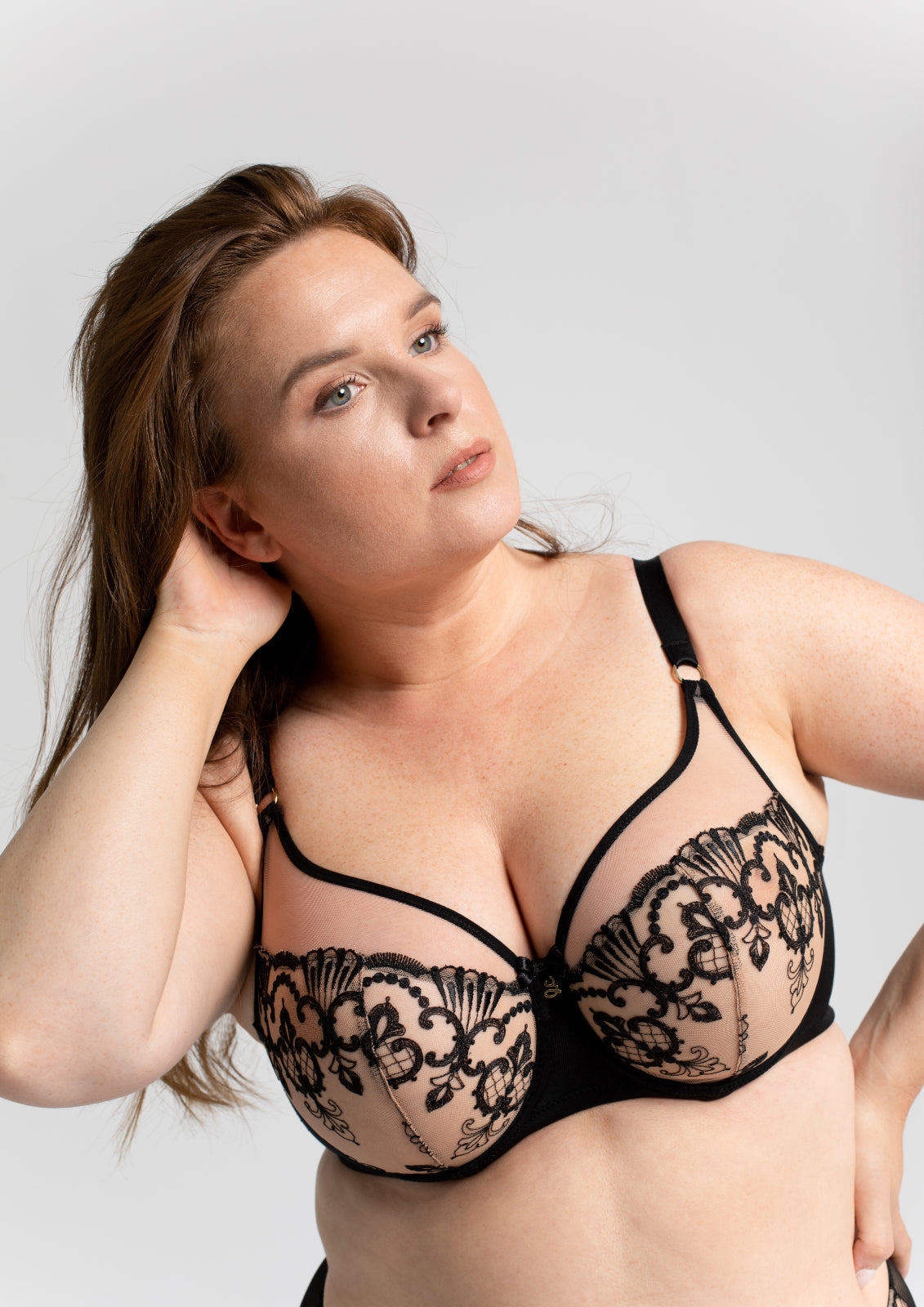
Plunge
Drops the centre front low, for necklines that go there too. On a fuller bust: less fabric holds the middle together, so the better styles add a firmer band and side panels rather than relying on the cups alone. Shop Scoop's plunge styles.
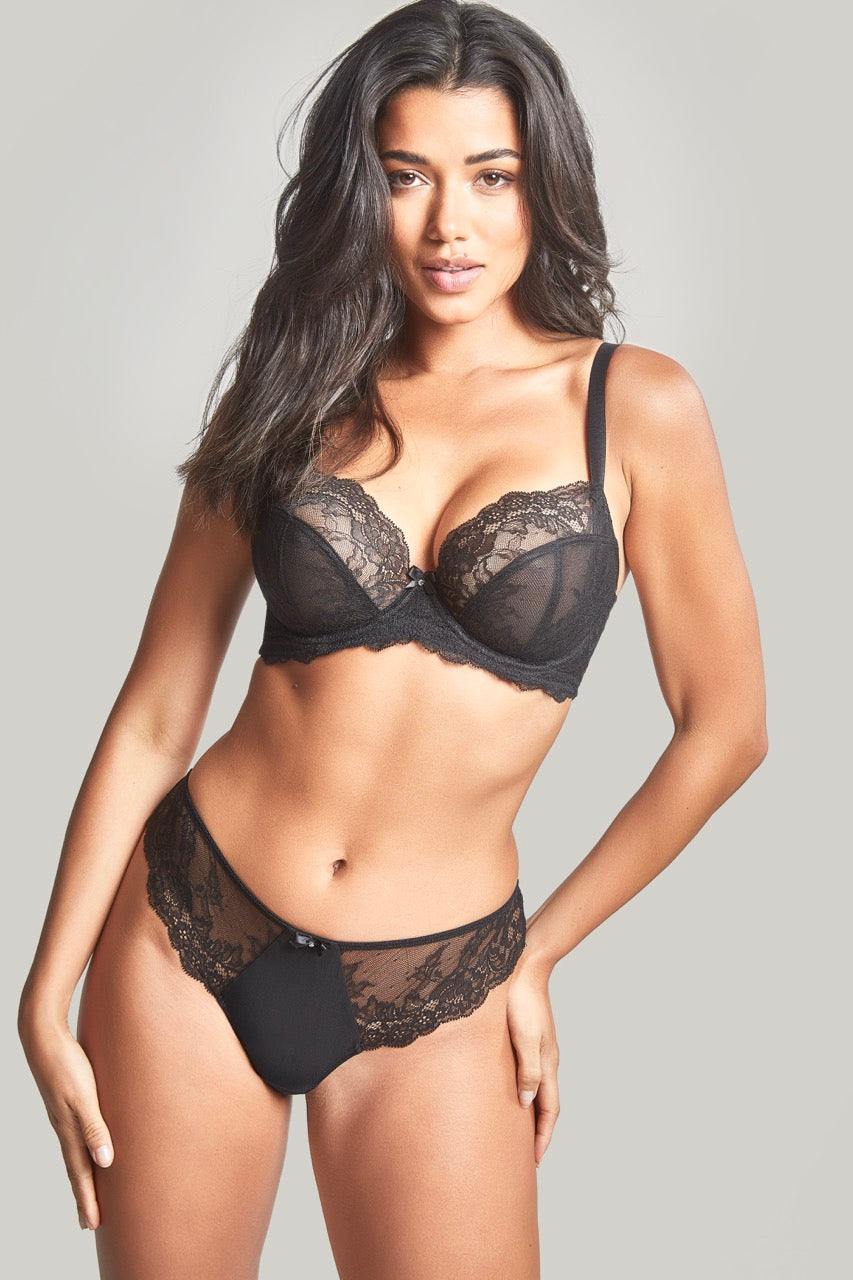
Demi
Covers roughly half the breast – more than a plunge, less than a balconette. On a fuller bust: carries less structure than a full cup, so it works best with a firm band and underwire, not as an everyday bra. Scoop stocks one: the Cherie Demi Plunge.
T-shirt / Moulded
Smooth, seamless cups – foam or spacer fabric in one piece, with nothing to show through a fitted top. On a fuller bust: dense foam gets heavy and flat at bigger sizes; a spacer-fabric version (a breathable, 3D-knit foam) holds its shape better. Scoop's Smoothie Spacer T-shirt bra is built this way.
A quick note on what the coverage words mean, since brands use them loosely: full covers the entire breast; ¾ leaves a little exposed at the top inner edge; demi covers about half; plunge drops the centre low. None of these bra coverage types is "better" – they suit different necklines.
Different Types of Bra, by How They're Built
Cup shape is only half the story – the other half is what's underneath it, holding everything up. Construction is where most bra types genuinely earn their keep.
Support comes from the band, not the straps: a snug band that doesn't ride up does most of the holding; straps mostly keep the cups in place.
Underwire
A rigid wire runs under each cup, following the crease where breast meets ribcage. On a fuller bust: usually the difference between a bra that holds its shape all day and one that doesn't. Our underwire bra guide.
Wireless / Soft Cup
No wire – just fabric and side panels doing the work. On a fuller bust, we'll be upfront: wireless bras generally give less lift than a wired equivalent. Comfort is still a valid reason to choose one – our wireless bra guide is honest about the trade-off.
Side Support
Extra panels, or wings, run from the cup round to the back, holding tissue in from the sides. On a fuller bust: stops tissue spilling out near your underarm in lower-cut styles. Our side support guide.
Padded / Spacer
Foam lines the cup; spacer fabric is a breathable, 3D-knit version that adds shape without trapping heat, and stops nipples from showing through a top. On a fuller bust: spacer fabric holds its shape better than dense foam past a D cup. Our padded bra guide.
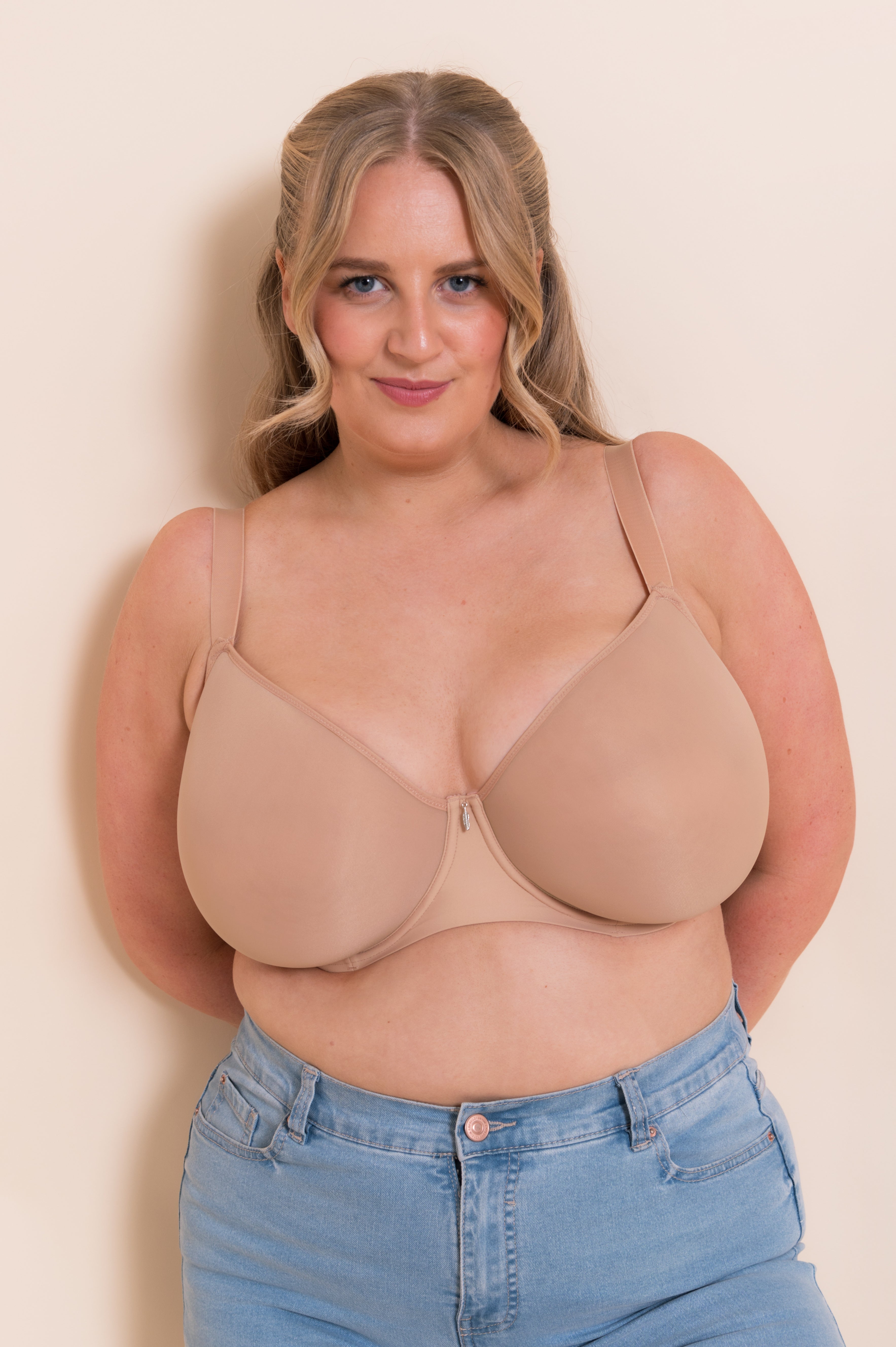
Unlined
No padding or lining – just structure under sheer or lace fabric, so the shape underneath shows through. On a fuller bust: the underwire and band do all the work with nothing to soften the edges, so fit matters even more. Shop Scoop's unlined styles. Torn between the two? Here are padded vs non-padded bras, compared.
Longline
Extends the band further down the torso, sometimes to the waist, for extra structure under fitted clothing. Less common in Indian retail, but useful under a corset-style top.
Types of Bra and Uses, from Everyday to Sport
Cup shape and construction tell you how a bra is built. This last group is about what these bra types are actually for.
Sports
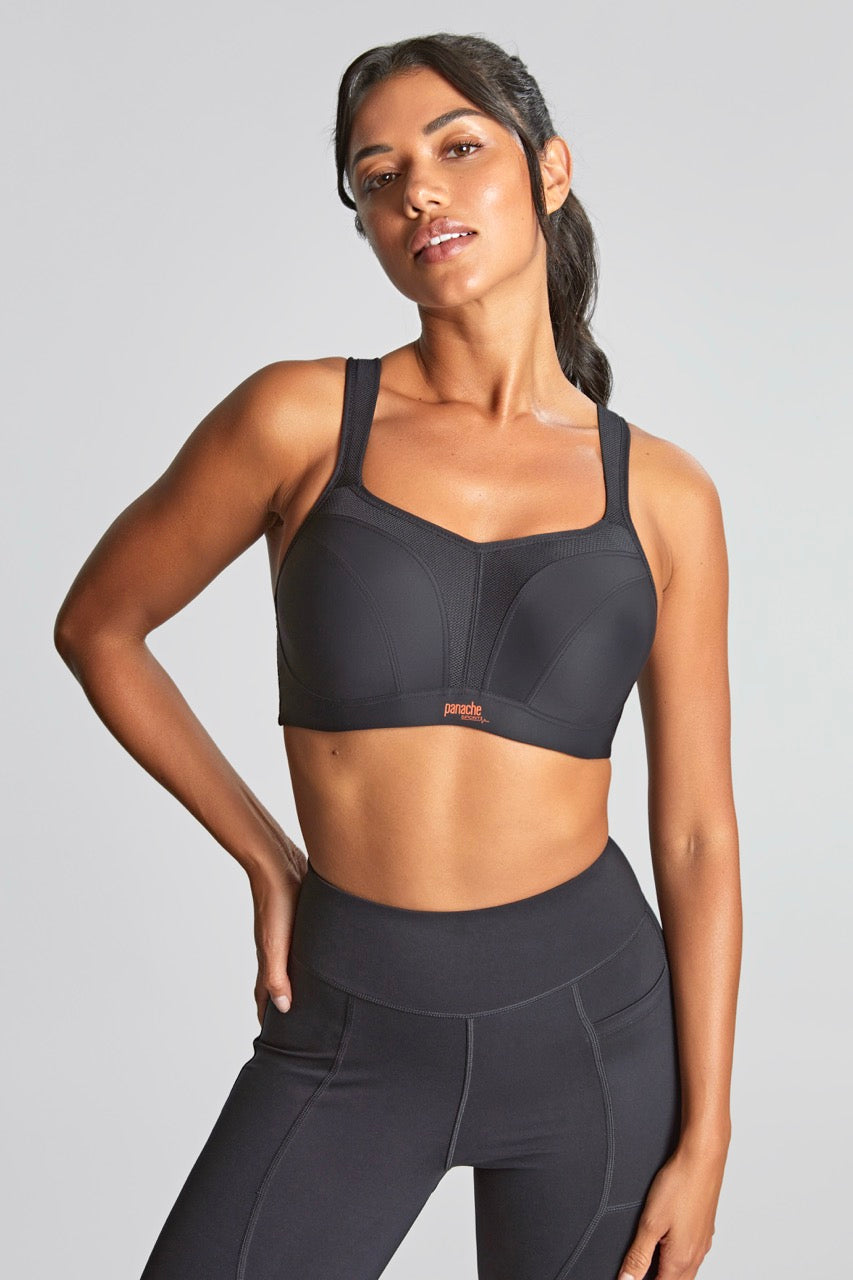
Encapsulated cups (each breast held separately, not squashed together) and a wide band that won't bounce loose mid-run. On a fuller bust: look for underwire and wide straps, not a soft compression crop. Our sports bra guide.
Strapless / Multiway
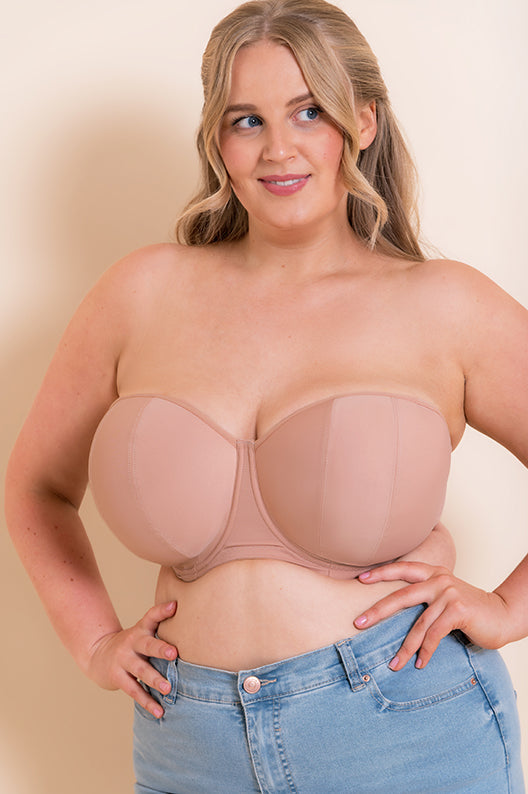
Grip comes entirely from the band; a multiway version adds straps you can rearrange – crossed, halter, one-shoulder. On a fuller bust: the band has to be genuinely firm. Our strapless bra guide.
Backless
A low or clip-in back instead of a standard band, for outfits that dip low behind. On a fuller bust: relies on adhesive or a low-set band, so support is genuinely more limited. Our backless bra guide. Matching a bra to a particular dress? See what bra to wear with a backless dress.
Minimiser
Redistributes breast tissue sideways and down rather than lifting it – it doesn't make you smaller, it changes where the fabric puts you. On a fuller bust: our minimiser bra guide explains the trade-off against support. For the basics, here's what a minimizer bra is and what it does.
Push-up
Angled padding lifts and pushes breast tissue up and together, for more visible cleavage. On a fuller bust: the effect is more subtle than on a smaller frame. Our push-up bra guide.
Nursing & Maternity
A drop-down or clip-away cup for feeding access, usually wireless, to fit a changing chest. Scoop doesn't currently stock nursing bras.
Bralette
A soft, often wireless style with minimal structure and light support. Scoop doesn't currently stock bralettes; on a fuller bust they work best as a layering piece, not your main support.
Bandeau
A straight strapless band with no cup shaping. Scoop doesn't currently stock bandeau styles – the flattest construction on this list, so we'd point a fuller bust toward a proper strapless bra instead.
Stick-on
Silicone cups that adhere to the skin with no band or straps. Support is minimal – the last resort on this list for a fuller bust.
Which Type of Bra Is Best for You?
There's no single best bra type – switching between bra types is normal, and it depends on your outfit, your day, and most of all your fit. A well-fitted balconette will outperform a badly fitted full cup every time.
If you're still not sure which shape or construction is right for you, that's what a fitting is for – someone measuring you properly and telling you what actually works on your body.
Related Reading
For more on finding your size before you shop any of these, see bras for a heavy bust, what your cup size actually means, our bra size chart, or the sizing mistakes most of us start with. Once you know the type you want, here is which bra brands make fuller-bust sizes.
Common questions
What are the different kinds of bras?
Bra types generally combine three choices: a cup shape (full cup, balconette, plunge, demi or T-shirt), a support structure (underwire, wireless, side support, padded or unlined) and a purpose (everyday, sports, strapless, minimiser, push-up). Naming a bra usually means naming one from each group, not picking from a single fixed category.
Which cup size is bigger, B or C or D?
D is bigger than C, and C is bigger than B – but the same letter means a different size depending on the band underneath it. A 32D and a 38D hold very different amounts; the letter is only half the size. The alphabet keeps going well past D – see what the letters actually mean.
Why are Gen Z not wearing bras?
Comfort, mostly, and a shift away from the idea that a bra is mandatory. Wireless styles, bralettes and simply going without have all become more visible and accepted, and there's no single right answer – some people need real support to feel comfortable, others don't. Wear whatever actually feels good on your body.
Which type of bra is best?
There isn't one "best" type – it depends on your outfit, your cup shape, and how well the bra fits, which matters more than the category. A well-fitted bra in almost any type beats a badly fitted one in the "right" type.
What are the three types of bras?
There's no official "three types," but the simplest way to group all bra types is by the three things that define any bra: cup shape, support structure, and purpose. Every bra is a combination of one choice from each group.
What bra should I wear for a heavy bust?
Look for underwire, a firm band, and full or balcony coverage before anything else – those three do most of the supporting. Padding, side panels and spacer fabric help, once the basics are right. Our guide to bras for a heavy bust goes through it feature by feature.
How can I tell if my bra fits correctly?
Four checks: the band stays level and doesn't ride up, the centre front sits flat against your sternum, the straps don't dig in or slip, and there's no bulging or gaping at the top or sides of the cup. More than one off, and you're likely in the wrong size rather than the wrong type – our bra quiz is a fast way to get a starting size.
That's the full list of bra types sold in India today, grouped by shape, by build, and by what you'd actually wear each one for. None of them is inherently right or wrong for a fuller bust – the type just tells you what to expect. Fit is still what decides whether it actually works on you. Before the style, get the fit right: here is how to choose a bra in five checks.