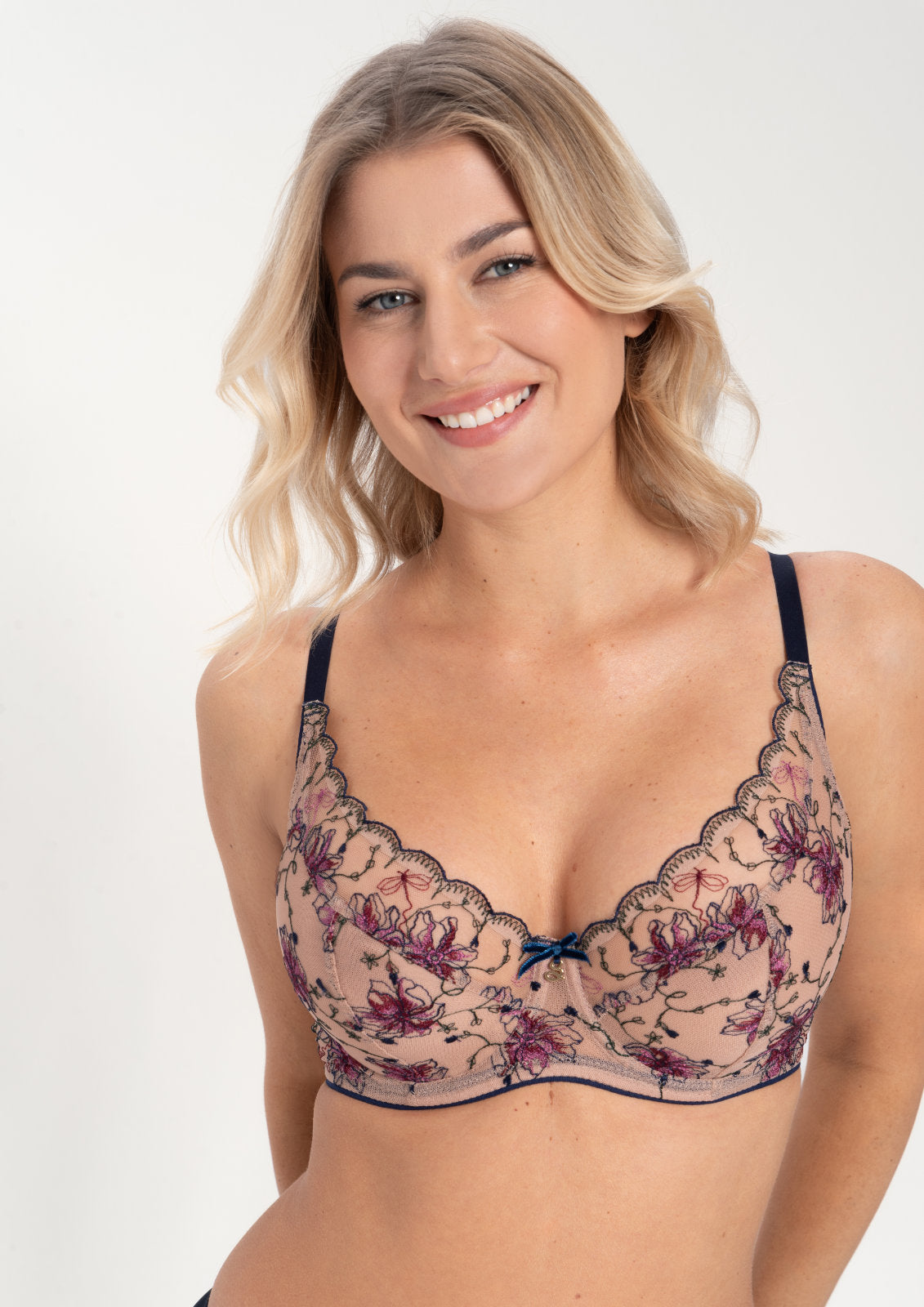
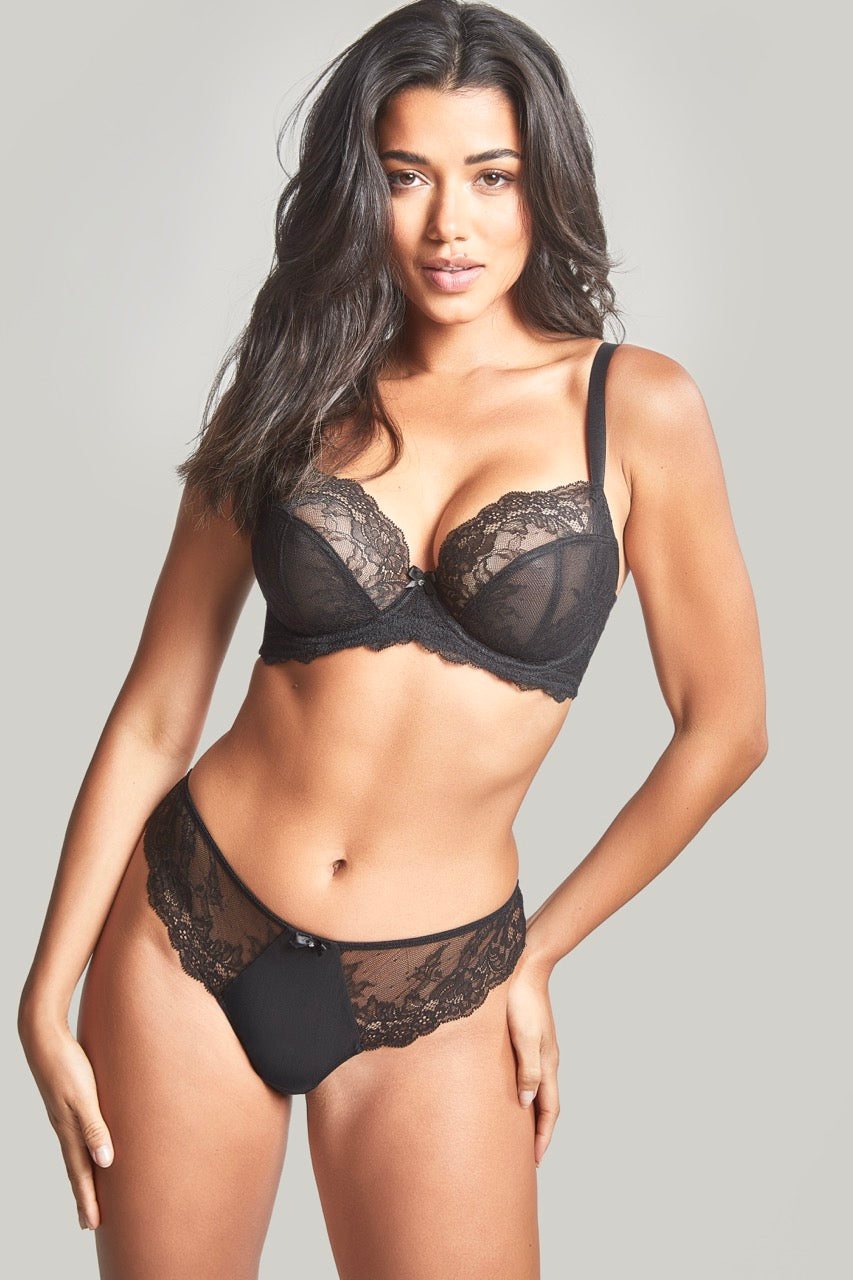


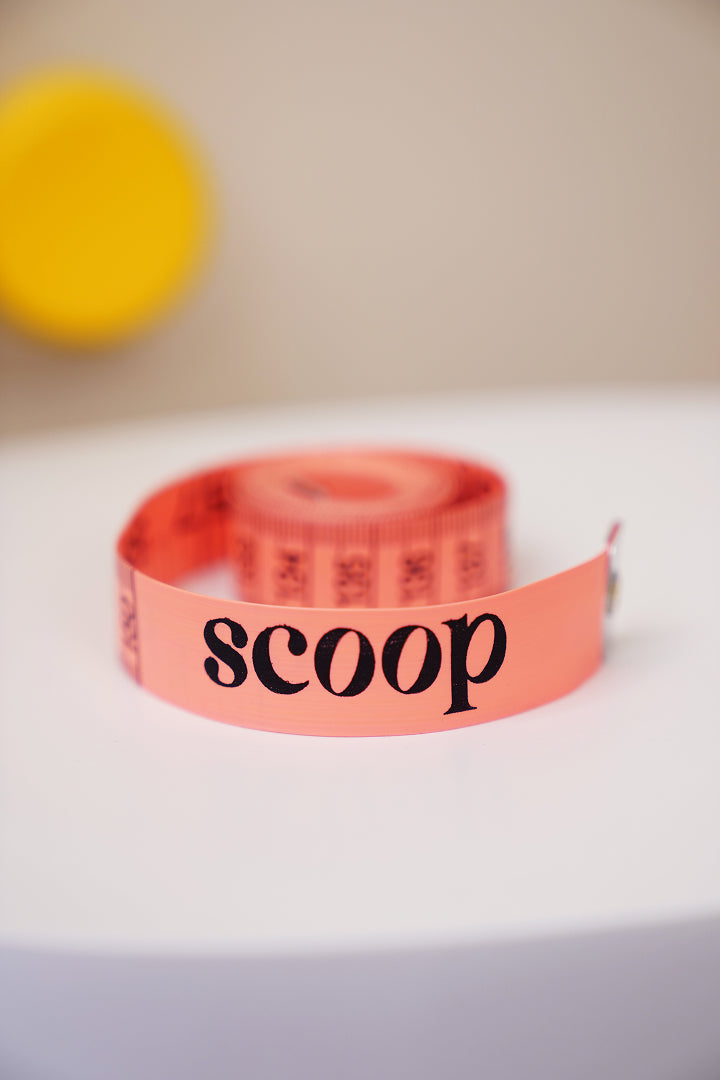
You need a soft measuring tape, a non-padded bra and five minutes. This page walks through how to measure bra size properly – four measurements rather than the usual two – and ends with your size in the letters Indian labels actually print. If the number you were given before never felt right, why so many of us end up in the wrong size explains how that happens. Prefer to type numbers into something? Our bra size calculator takes the same four measurements and works your size out for you.
Measure in whichever unit your tape reads. Indian tapes are usually marked in inches, so what follows is how to measure bra size in inches; for how to measure bra size in cm, every figure is given in centimetres in brackets too.
How do you measure bra size at home?
Measure snugly around your ribcage, directly under your bust: that number is your band, with nothing added to it. Then measure around the fullest part of your bust twice, once standing and once leaning forward. Take the larger bust number, subtract the band, and count one cup letter per inch. Band plus letter is your size. Do it all in a non-padded bra, tape level all the way round.
That is how to measure bra size at home in one paragraph. The four measurements, in order:
- Under-bust, snug. Around your ribcage, directly under your bust. This is your band.
- Under-bust, tight. Same place, tape pulled as tight as is comfortable.
- Bust, standing. Around the fullest part, standing straight.
- Bust, leaning. Same place, bent forward at the hips.

Step 1 – the band: measure under your bust
Stand straight, arms down, breathe out normally. Do not empty your lungs to chase a smaller number – you want what your ribcage is, not the smallest it can be talked into.
Wrap the tape around your ribcage directly under your bust, level all the way round including across your back, and pull it snug. The tape is not elastic, but the bra is. Read to the nearest whole inch: that figure is your band size.
Now take it again with the tape as tight as is comfortable. That tighter underband reading is what a bra should be able to close to on its tightest hook. Two or three inches between the readings is normal on a softer ribcage: the band will feel loose at the first number and right at the second.
Do not add anything to either one. Many guides tell you to add four or five inches. That habit dates from stiff bras that could not hold anything up on their own, and it is why so many people wear a 36 that rides up their back while the straps do the band's work. Your band is your under-bust, as measured. If these words are new, our glossary has the rest.
Step 2 and Step 3 – the bust, standing and then leaning
For Step 2, wrap the tape around the fullest part of your bust, level with the floor all the way round including across your back, which is where most home measurements go wrong. Not tight, not drooping: resting on you.
Do it in the bra you would actually wear, and make it a non-padded one; padding adds an inch or more that is not yours. Your bust number moves with what you have on, and it moves more the fuller your bust – what the letters actually mean covers why.
For Step 3, bend forward at the hips until your back is roughly parallel to the floor and measure at the fullest point again.
Most guides that teach how to measure bra size stop at two measurements and never ask for this one, and it is the step that changes people's answers. Tissue that sits low or out toward your sides when you stand comes forward when you lean, and a cup has to hold all of it. Use the larger of your two bust numbers.

How to measure cup size
You do not measure it – you work it out. Take your larger bust number (your over-bust, on charts that use that word), subtract your band, and count one cup letter for every inch of difference.
Worked through: an under-bust of 32 in (81 cm), a standing bust of 40 in (102 cm), a leaning bust of 41 in (104 cm). The leaning number is larger, so use that one. 41 minus 32 is nine inches, and nine inches is a G cup. The size is 32G.
That same nine inches has a different name depending on where the bra was made, and bras sold to fuller busts in India mostly use the UK letter. The full ladder is on what the letters actually mean. A 32C is the same sum: a 32 band with a three-inch difference.
How do you know your bra size is right?
Getting the tape right is only half of how to measure bra size; how to know bra size for certain is the other half, and it is what the bra does once it is on. Five checks, quicker than the measuring:
- The band sits level and firm on the loosest hook. A new bra should fit on the loosest setting so it has somewhere to go as the elastic softens. Riding up at the back means too loose.
- The centre piece between the cups lies flat against your chest. If it lifts away, the cup is too small.
- No spill over the top or at the sides, no gap or wrinkle in the cup. Either one means the letter is off.
- The straps carry almost none of the weight. One finger should slide under a strap.
- Nothing shifts when you lift your arms.
Band tight but cups right? Go up one band and down one cup letter. Band loose? The reverse. Those are sister sizes, and our bra size chart lays them all out in a grid. If two of these checks disagree with each other, that is what a fitting is for.
Measuring for a fuller bust: what changes
Three things change in how to measure bra size when your bust is fuller, and none of them are about your body being unusual.
The leaning measurement matters more. On a smaller bust the standing and leaning numbers are often the same; on a fuller one they can be two inches apart – a cup letter or two.
Your two under-band readings drift further apart on a softer ribcage. Trust the tighter one – that is what the bra has to close to.
And a difference past five inches is ordinary. The alphabet keeps going: DD, E, F, FF, G, GG, H and onward, and the biggest bra size sits much further along than most charts print. The bras we stock start at a DD cup and run to K, so if a chart ran out before your number did, that is a chart problem, not a body problem. For what to wear in the size you just worked out, bras for a heavy bust is the next read.

Related reading
- Measured? Here is how to choose a bra that fits – five checks to run in the trial room.
- Why so many of us end up in the wrong size – how those habits took hold.
- What the letters actually mean – the cup ladder, UK and US, past D.
- The average bra size in India – why the 34B everyone quotes is a shopping figure.
- Take the bra quiz – the same method, as a tool.
- Bras for a heavy bust – what to wear in your size.
Common questions
How do I measure my bra size at home?
Snug under-bust for the band, nothing added. Then the fullest part of your bust twice, standing and leaning, taking the larger number. Subtract the band and count one letter per inch. That is how to measure bra size in four measurements and about five minutes, in a non-padded bra with the tape level all the way round.
What is the 2 finger rule for bra fit?
Two fingers should slide under the band comfortably, and no more. One finger under a strap. It is a check you run once the bra is on rather than a measurement, and it tells you whether the band is supporting you or your shoulders have been drafted in to help.
How do I calculate my bra size?
Larger bust measurement minus band measurement, then one cup letter per inch of difference. Band number plus letter is your size. The worked example above runs it with real numbers, and what the letters actually mean has the full ladder past four inches.
Which is bigger, 34C or 36C?
A 36C. The number is your ribcage, so the 36 band is larger, and with the same letter on a bigger band the cup holds more too. It is also why asking whether B, C or D is bigger only half works: a letter means nothing without its band number, and a 34C and a 36B hold roughly the same cup volume.
How do I measure my bra size without a measuring tape?
Use string or ribbon. Wrap it where the tape would go, mark where it meets, then lay it flat against a ruler. A paper tape printed at home works too. If the numbers keep coming out differently, book a fitting and let someone else hold the tape.
How to measure bra size ABCD?
The letters are not descriptions of a bust. They are the difference in inches between your bust and your band: one inch is an A, two a B, three a C, four a D. Nothing special happens at D – the alphabet keeps going, and past that point a UK label and an American one give the same cup two different letters.
How do I know the right bra size?
Measure first, then run the five fit checks above: band level and firm on the loosest hook, centre piece flat, no spill or gaping, straps carrying almost nothing, nothing shifting when you raise your arms. If the tape and the bra disagree, believe the bra – it is telling you something about shape a tape cannot pick up.
How do I calculate my bra size in India?
The method is the same anywhere; what differs is the label. If you are looking up how to measure bra size in India specifically, the answer is that most fuller-bust bras sold here carry UK letters, so the same difference shows up as a different letter on an imported American brand. Measure in inches or centimetres, whichever your tape reads.
Is this the same as the method the bra-fitting communities online use?
Yes. The snug and tight under-band readings, the standing and leaning bust measurements, and adding nothing to the band are the four steps those communities settled on years ago. Our fitters got there from the other direction: measuring people all day, and watching where the two-measurement method goes wrong.
How often should I measure again?
Every six to twelve months, and sooner after weight change, pregnancy or breastfeeding, or whenever your bras stop feeling right. Bands stretch and bodies change. Re-running the four steps is how to check bra size without waiting for something to feel wrong.
That is how to measure bra size at home: four measurements instead of two, nothing added to the band, and a letter that carries on past D as long as it needs to. Write your numbers down somewhere you will find them again. If the tape keeps giving you an answer your bras disagree with, that gap is the most useful thing you have learned today.